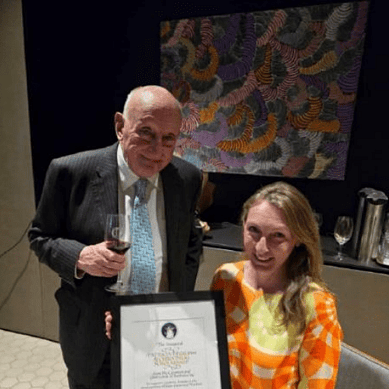
2024 winner Victoria Lynagh with Chris Begg
The Ceramics and Glass Circle of Australia Scholarship
The sum of $2,500, awarded in honour of Patricia Begg OAM and Chris Begg, is presented annually to a third year student undertaking a Bachelor of Arts (Fine Art) with a specialisation in ceramics at RMIT University.
The selection criteria are:
originality and creativity
technical proficiency and craftsmanship
aesthetic impact and delight.
The annual winner must also present their work at a Circle meeting during the year.
The award is offered to support students in the development of their ceramic practice.
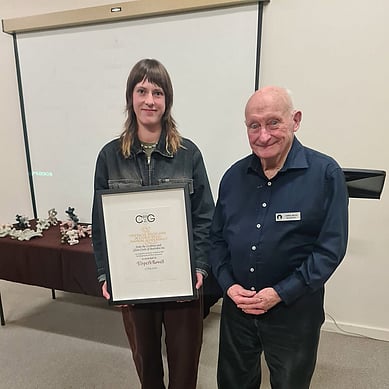
2026 Scholarship winner - Elspeth Rowell
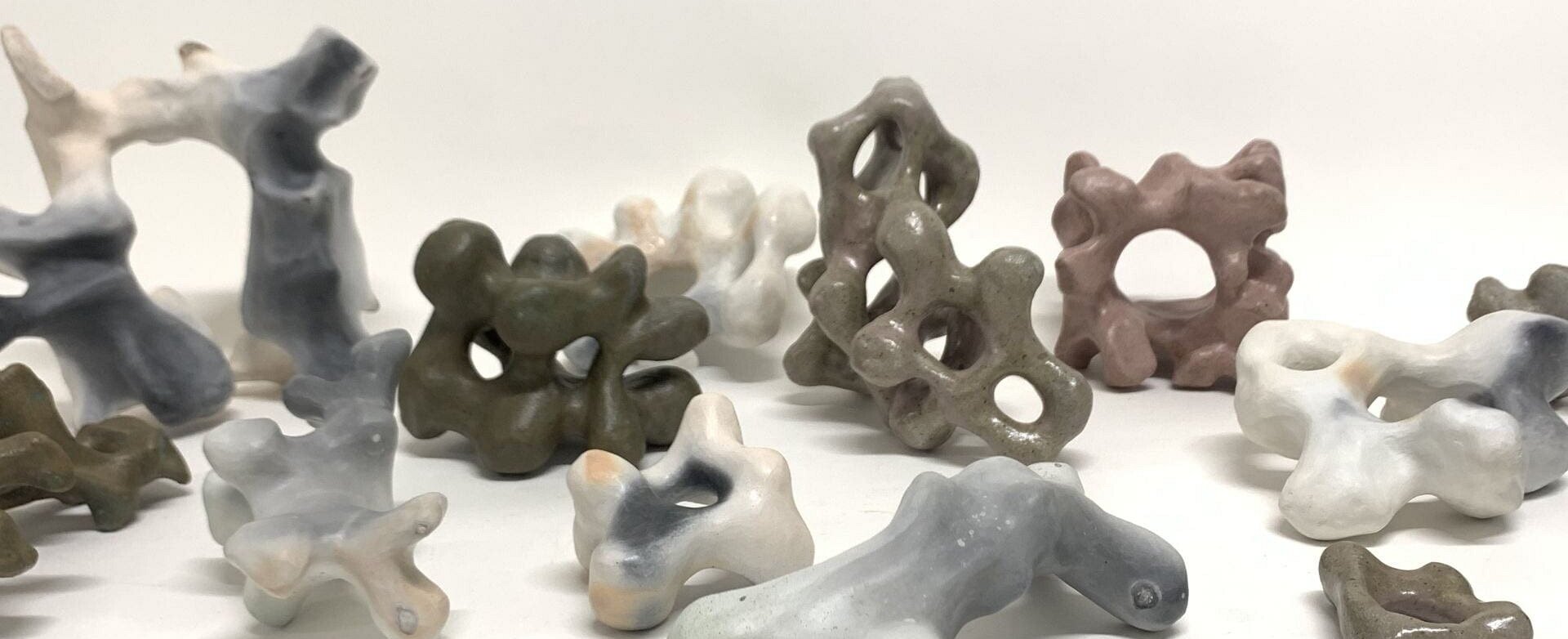
Based in Naarm, Elspeth Rowell is a contemporary ceramic artist whose work explores material culture through sculptural assemblages, investigating the different structures that shape systems of knowledge, categorisation and collecting practices. Her work draws inspiration from 16th century Cabinets of Curiosity, Natural History museums of the 18th century and contemporary archival institutions, challenging the confines of western classification systems. Rowell has exhibited her work in her solo show Secure Escape at Tuggeranong Arts Centre, Canberra, as well as a number of group shows across Naarm.
More info here
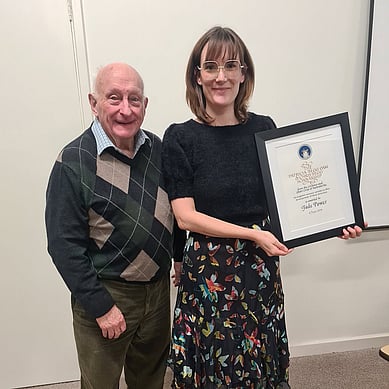
2025 Scholarship winner - Jade Power
Jade Power is a Naarm/Melbourne based emerging artist practicing primarily in the expanded field of ceramics. Power’s practice is grounded in a deep engagement with material and the quiet, yet rigorous labour of making. Working primarily with porcelain, she approaches creative practice as a space where control yields to collaboration.
This practice-led research project explores the entangled and symbiotic relationship between creative control and material agency to foster uncertainty as a creative force. It investigates how engaging deeply with ceramic materials through the methodologies of embodied knowledge, iterative material experimentation, and collaborative ‘making with’ can serve as a subversive strategy encouraging alternative ways of knowing, making, and being in the world that challenge ideas of mastery. In doing so, the research recognises the clay, kiln, and environment as active collaborators, drawing on Posthumanist and New Materialist frameworks that question anthropocentric notions of authorship. The study also highlights the blurring of the fragile boundaries between craft and contemporary art, intention and emergence, authorship and co-agency. Here, the method of time and labour-intensive processes plays a key role. Instead of pursuing a pre-conceived vision, the research engages with an open-ended inquiry where transformation occurs through sustained, physical engagement with materials and processes. Ultimately, this research proposes a way of working that values process-led outcomes over fixed or predetermined results.
More information here
2024 Inaugural Scholarship winner - Victoria Lynagh
Victoria's work has developed from concerns surrounding the changing landscape and the increased prevalence of naturally occurring bushfires in Australia. Further influence comes from the debate on the historical use of controlled burns by indigenous peoples to manage the natural environment in a way that benefits humans and wildlife. Many ecosystems have evolved with fire as an essential contributor to habitat vitality and renewal, with plant species regenerating in the fire-affected environments when the resultant ash is used as a source of nutrients to germinate, establish or reproduce. Her body of work reflects the different facets of the changing Australian landscape. Drawing inspiration from controlled burns and wildfires, I blend and contrast the devastation they cause with the beauty and colour of re-growth that can follow.
She makes non-functional sculptural ceramic forms with a focus on hand-building and surface treatments. Her practice is process-driven and I employ the ancient techniques of terra sigillata, burnishing and saggar firing in my work. She enjoys combining the controlled making environment with the spontaneously transformative nature of firing works with combustible material. She uses a number of different clay bodies and her work is influenced by the landscapes that I have lived in and the natural world.